Random Acts of Genealogical Kindness Family History Library Microfilm
Just announced: The FamilySearch microfilm lending service will stop on August xxx, 2017. Let's cover what we know so far, how it may bear on yous, and strategies for getting the information you need.
WHAT: FamilySearch Microfilm Lending Ends
Almost of the Family History Library's microfilm vault has already been digitized and is online–or will be inside a short time. Co-ordinate to the website:
"Over 1.v million microfilms (ca. 1.v billion images) have been digitized by FamilySearch, including the about requested collections based on microfilm loan records worldwide."
However, the world's largest lender of microfilmed genealogical records will be discontinuing the distribution of microfilms to Family History Centers in the most futurity.
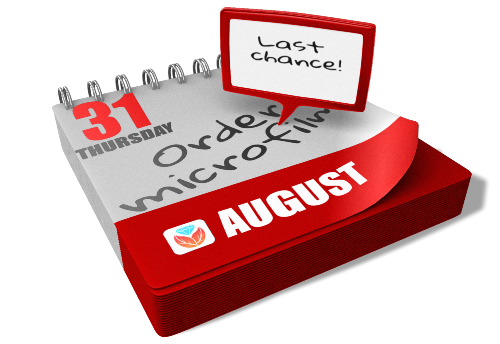 "On September 1, 2017, FamilySearch volition discontinue its microfilm distribution services," announced the site yesterday. "The change is the issue of significant progress in FamilySearch'due south microfilm digitization efforts and the obsolescence of microfilm technology. Digital imaging has made it easier to find ancestors through the cyberspace, mobile, and other technologies."
This means the clock is at present counting down your ability to borrow microfilmed genealogical records from the Family History Library. The terminal twenty-four hours you can place an order for delivery to your local Family History Heart is August 31, 2017.
It's a change I've seen coming, but it's still a little disconcerting now that it'due south here. Just change is the norm in today's decorated world, and so permit's break down the details we know then far together.
WHY: Why are they discontinuing microfilm lending before they're done digitizing?
Information technology'southward just as well expensive. "The cost of duplicating microfilm for circulation has risen dramatically, while demand has decreased significantly," says a FamilySearch Q&A. "At the aforementioned fourth dimension, it has become increasingly hard and costly to maintain the equipment, systems, and processes required for flick duplication, distribution, and admission." FamilySearch wants to redirect its microfilm lending resources to providing more than and better electronic record access.
I have personally visited the microfilm distribution facility, and the best analogy I can requite you is that it looks a bit like the inside of an Amazon warehouse. It'south a mammoth and expensive undertaking, certainly not something you open or close lightly. I'k thankful that in the decades before the Cyberspace, FamilySearch devoted so many resource to helping all of us proceeds access to hard-to-find records from around the globe.
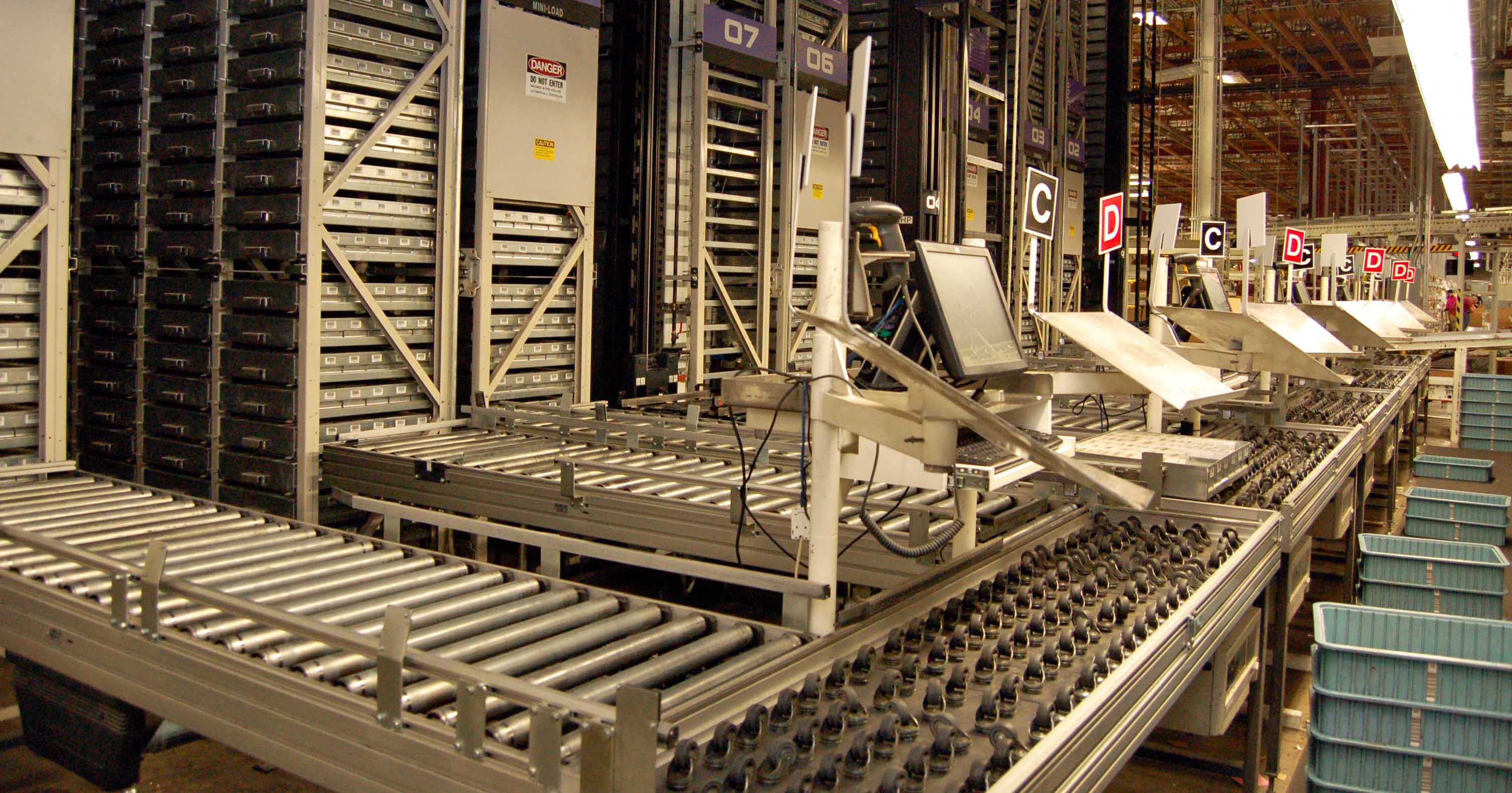
Photo Credit: Lisa Louise Cooke
WHEN: What volition be bachelor online and when
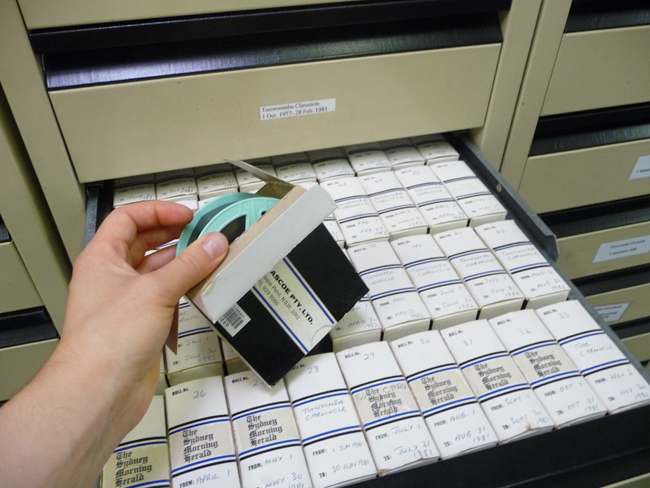
According to FamilySearch, they hope to finish digitizing the records that they accept permission to digitize, in 2020. Unfortunately, some films nosotros will not be digitized considering of contractual limitations, data privacy, or other restrictions. Look to the Catalog for access details for the records you want.
By Lhsunshine (Ain work) [CC Past-SA 3.0 (http://creativecommons.org/licenses/past-sa/iii.0)], via Wikimedia Eatables
HOW: How to gild FamilySearch microfilms between now and August 31, 2017
I encourage you to use the microfilm lending service while it is still available. While about microfilmed records volition be eventually digitized, the fate of a small percentage may remain unknown for some time. Follow these steps to view them now:
i. Go to FamilySearch.org and log in, or create a complimentary login. (You'll demand the login to order records.)
2. Under the Search carte, select Catalog.
three. Search past location, listing first the largest jurisdiction (such as the country) and proceeding to the smallest, such as "U.s.a., Illinois, Cook, Chicago."
iv. Review search results by clicking on the record categories and then each entry. Within the entries, picket for interesting items that only list microfilm or microfiche formats.
5. Within record entries, order items you want by clicking the microfilm reel icon on the far right, under Format. Select the lending period and the correct currency. Information technology currently costs $7.50 USD to infringe a microfilm reel for 90 days.
During the order procedure, you'll select a family unit history heart near y'all to receive the particular(s). When your lodge arrives, y'all'll be notified. Check the middle's schedule earlier visiting; most have express hours. Centers are free to use. When you go there, identify yourself and request your film. Then put it in the microfilm reader and scroll through it until you discover the item number and pages you need. (Here's a helpful article: How to Utilise a Microfilm Reader.)
What about accessing microfilmed records after August 31, 2017?
You'll still have several options. Sunny Morton, writer of the quick reference guide Genealogy Giants: Comparing the 4 Major Websites,says the FamilySearch catalog volition nevertheless be a go-to resource:
"At this point, the Family unit History Library in Salt Lake City, Utah nonetheless plans to keep on hand microfilmed copies of records that are not however online. So your options include going to view them in person (since to the best of our knowledge the library won't exist lending them), arrange for someone else to view them (such as through the Random Acts of Genealogical Kindness Facebook group), or use the FamilySearch Catalog to identify the records and so attempt to locate them through other repositories and websites.
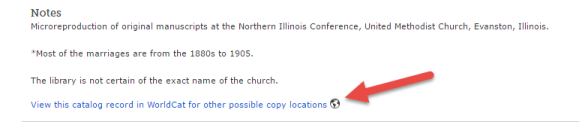
To find records y'all may borrow from other sources, click where it says 'View this itemize record in WorldCat for other possible copy locations' [see screenshot below]. This will accept you directly to this item's listings in WorldCat, which is the enormous, complimentary multi-library online catalog. Expect either for a copy at a library nearly you, or a copy at a facility that participates in inter-library loan. (This is the same procedure you already have to utilize to detect copies of books you can infringe, since the Family History Library doesn't lend these, either.)"
What about accessing the digitized records?
Later on August 31, 2017 many genealogists will exist turning to the online FamilySearch catalog and Family History Center Portal. (Learn more about the Portal at the FamilySearch Wiki.) As you endeavor to view records through the portal, you may exist prompted to become to a Family unit History Center to view the record, and the site volition link you to a map of all locations. It's important to understand the difference betwixt an official Family History Center and an Affiliate Center. We've learned that Affiliate Centers do not have access to what is called the Family History Portal. That portal is only accessible from an officially designated Family History Heart.
So how exercise you know which location on the map is official, and which is an chapter? I turned to genealogy blogger and friend of Genealogy Gems Amie Tennant for description:
The (online) FamilySearch map of Family History Centers is not authentic. With the new changes to microfilm loans, this is going to be a large problem. In other words…if a person assumes all FHCenters are the same and travels to the nearest one, they will be sorely disappointed to realize that this 1 will NOT have admission to all the digitized microfilm. (Researchers) should call ahead to confirm whether the center they run across on this map is an affiliate or a total FHC with access to the portal.
I've reached out to FamilySearch for additional official information on this and several other of import questions that have arisen with the discontinuation of microfilm lending. I'll report to y'all here on the Genealogy Gems blog and the podcast every bit more information becomes available. Cheque out Amie's article for more than information on the diverse levels of access.
What exercise you think?
The end of the FamilySearch microfilm lending service is a major milestone. It signals exciting future online access, but provides obstacles for the next few years. What suggestions exercise you lot have for researchers to gain additional access to essential microfilm? Please share with the Genealogy Gems community in the Comments below.
Source: https://lisalouisecooke.com/2017/06/27/the-end-of-familysearch-microfilm-lending/
0 Response to "Random Acts of Genealogical Kindness Family History Library Microfilm"
Publicar un comentario